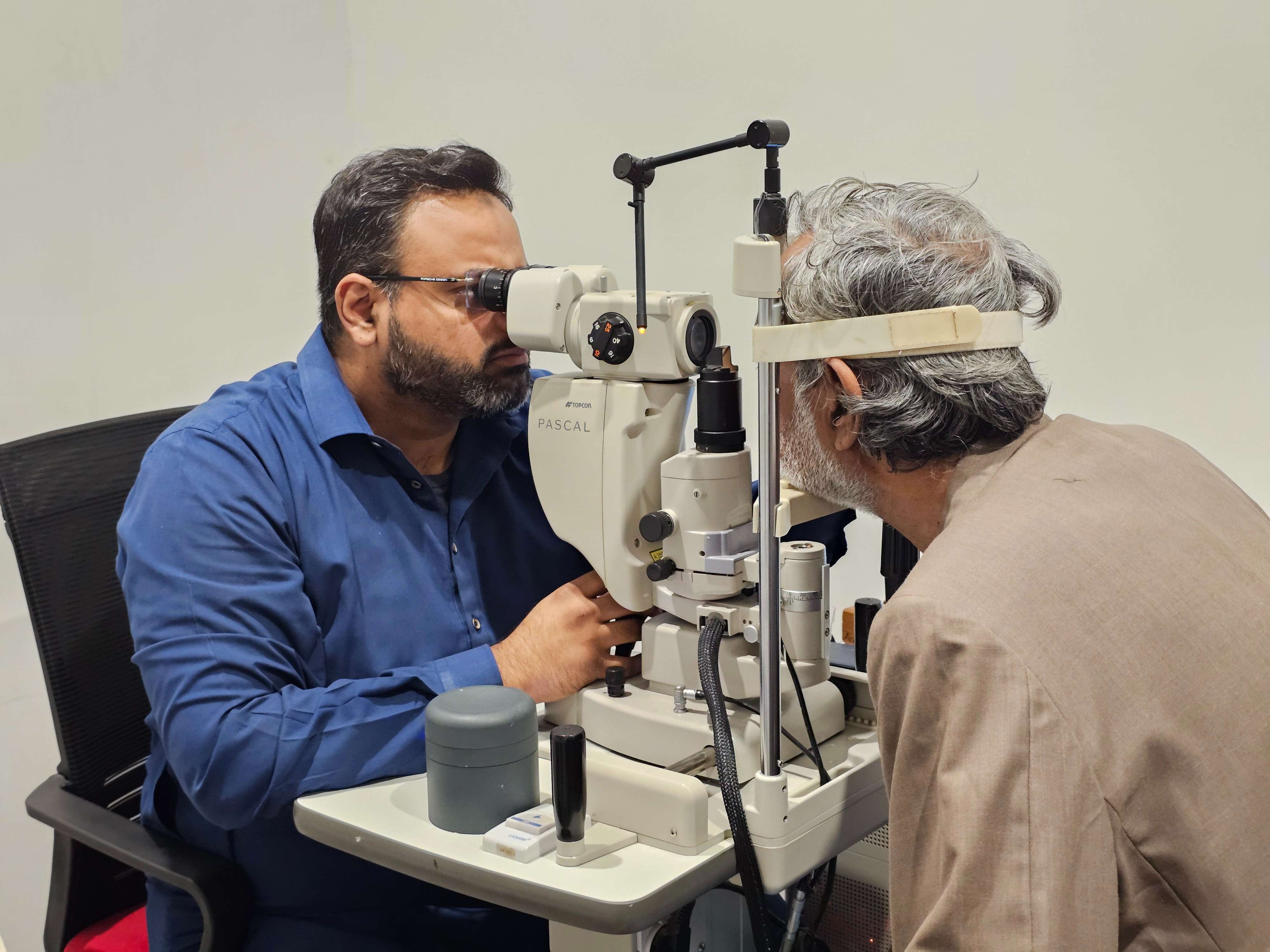
Corneal infections are a serious eye problem that can affect anyone. In Pakistan, many people are unaware of the early signs of these infections. If not treated quickly, they can cause lasting damage or even vision loss. Recognizing hidden symptoms is important to get timely treatment. This blog explains common corneal infections, their causes, symptoms, and how you can protect your eyes. Early detection saves sight.
The cornea is the clear, front part of the eye that helps focus vision. Infections happen when bacteria, viruses, fungi, or parasites enter and damage the cornea. These infections cause pain, redness, and blurred vision. Some common types include bacterial keratitis, viral keratitis, and fungal keratitis.
Several factors increase the risk of corneal infections here, including poor hygiene, improper contact lens care, eye injuries caused by dust or foreign objects, and the use of contaminated eye drops or cosmetics. Exposure to polluted water and existing eye or immune system diseases also contribute. Awareness of these causes can help in prevention.
Corneal infections often start with mild symptoms that people ignore. Early signs include slight eye redness, irritation, the sensation of something in the eye, increased tearing, light sensitivity, mild pain, itching, or blurred vision. Noticing these early symptoms is key to prompt treatment.
If any symptoms like redness, pain, or blurred vision last more than 24 hours, it’s important to consult an eye doctor immediately. Early diagnosis and treatment can stop the infection from worsening and prevent serious problems such as corneal ulcers or vision loss.
Many people do not recognize the early symptoms of corneal infections. Awareness helps people seek early treatment and avoid vision loss. Sharing information with family and community protects more eyes. Early care improves outcomes and preserves sight.
Corneal infections can cause serious eye damage if ignored. Knowing the hidden symptoms and seeking early treatment is vital. Maintain good hygiene, protect your eyes, and visit an eye specialist if symptoms appear. Early care can save your sight and improve eye health across Pakistan.