Our eyes are one of the most vital organs, yet they are often overlooked until vision problems arise. Comprehensive eye diagnostic services play a crucial role in maintaining eye health, detecting early signs of diseases, and ensuring that any issues are treated before they lead to permanent damage. Whether you’re visiting an optometrist for a routine check-up or an ophthalmologist for specialized care, understanding what tests are involved can help you prepare and appreciate the importance of thorough eye evaluations.
In this guide, we’ll explore what comprehensive eye diagnostic services include, the types of tests typically performed, and why these tests matter for your overall health and vision.
Comprehensive eye diagnostic services refer to a complete series of tests designed to evaluate the overall health of your eyes and the quality of your vision. These tests go beyond a simple vision screening that checks how well you can see; they also assess the internal and external structures of your eyes, measure eye pressure, and help detect conditions such as glaucoma, cataracts, diabetic retinopathy, and macular degeneration.
Such diagnostic services are typically performed by qualified optometrists or ophthalmologists using advanced instruments and imaging technology. The goal is to identify problems early, when treatments are most effective, and to track any changes in your eye health over time.
Many eye diseases develop silently and painlessly in their early stages. For example, glaucoma and diabetic retinopathy often show no symptoms until vision loss occurs. Regular eye examinations are essential because they allow doctors to detect early warning signs that may not be obvious to you.
Comprehensive eye exams can also reveal underlying health problems that affect more than just your eyes, such as high blood pressure, diabetes, and even neurological disorders. In many cases, the eyes act as a window to your overall health, making these diagnostic tests an important part of preventive care.
A comprehensive eye exam typically consists of multiple tests that assess different aspects of vision and eye health. Here’s an overview of the most common diagnostic tests you can expect during your appointment:
The visual acuity test is the most familiar part of an eye exam. It measures how clearly you can see at different distances using an eye chart (commonly known as the Snellen chart). You’ll be asked to read letters or symbols that get smaller as you move down the chart, one eye at a time.
This test helps determine if you need corrective lenses or if your current prescription needs updating.
Refraction testing determines your exact eyeglass or contact lens prescription. Your eye doctor will use a phoropter — a device containing different lenses — and ask which lens combinations make your vision clearer. This process helps measure nearsightedness (myopia), farsightedness (hyperopia), and astigmatism.
In modern clinics, computerized refractors may also be used to obtain quick and highly accurate readings.
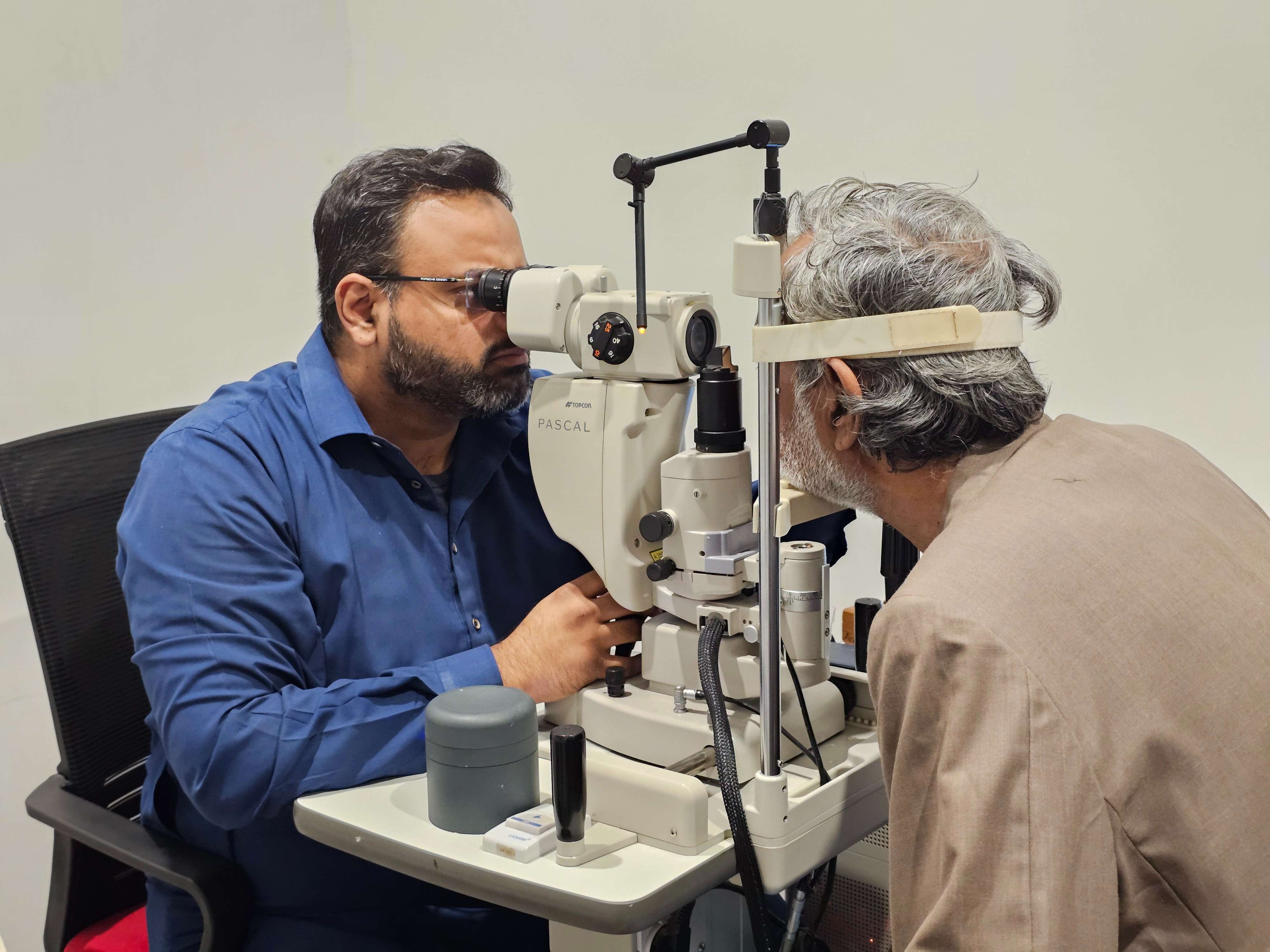
The slit-lamp exam allows the doctor to examine the front structures of your eye under magnification. A special microscope and a bright beam of light are used to evaluate the cornea, iris, lens, and eyelids for any abnormalities, infections, or cataracts.
This test is crucial for detecting conditions such as conjunctivitis, corneal injuries, or signs of early cataract formation.
Tonometry measures the pressure inside your eyes — known as intraocular pressure (IOP). High eye pressure is one of the primary risk factors for glaucoma, a condition that can cause irreversible vision loss.
Non-contact (air puff) tonometry: Uses a quick puff of air to flatten the cornea slightly and measure pressure.
Applanation tonometry: Involves a small probe touching the cornea after applying numbing drops for a more precise reading.
Ophthalmoscopy, or a retinal exam, allows the doctor to view the back of your eye — including the retina, optic nerve, and blood vessels. This test is done using a handheld ophthalmoscope or through digital retinal imaging.
Optic nerve damage (linked to glaucoma)
Digital imaging systems can even capture high-resolution images of your retina for comparison during future visits.
The visual field test measures your peripheral (side) vision. You’ll be asked to focus on a central point while lights flash at different areas of your visual field. Missing these lights may indicate vision loss due to glaucoma, optic nerve issues, or brain injuries.
This test is especially important for patients who are at risk for glaucoma or who have noticed blind spots or tunnel vision.
A color vision test helps determine if you have color blindness or any difficulty distinguishing between colors. The most common version is the Ishihara test, which uses a series of plates with colored dots forming numbers or patterns.
Detecting color vision issues can also help diagnose certain eye or optic nerve disorders.
Corneal topography maps the surface curvature of your cornea. It’s often used to detect irregularities such as keratoconus or to plan surgeries like LASIK or cataract procedures. This test is painless and provides valuable data about the shape and health of your cornea.
OCT is one of the most advanced diagnostic tools available in modern eye care. It uses light waves to create detailed cross-sectional images of the retina, allowing doctors to see each layer and detect even the smallest structural changes.
During dilation, eye drops are used to widen your pupils so that the doctor can examine the retina and optic nerve more clearly. While it can cause temporary light sensitivity and blurry vision, it’s a vital part of detecting early eye diseases.
Modern eye clinics use advanced technology to enhance diagnostic accuracy. Examples include:
Fundus photography: Captures detailed images of the retina.
Autorefractors: Quickly estimate refractive errors.
Wavefront analysis: Provides customized vision correction data.
Ultrasound biomicroscopy: Used to image internal structures when the cornea is cloudy or opaque.
These innovations ensure that eye problems are detected earlier and treated more effectively.
While everyone benefits from regular eye exams, certain groups need more frequent testing:
People with diabetes, hypertension, or family history of eye disease: Annually or as advised by an ophthalmologist.
Regular check-ups are particularly crucial for individuals who spend long hours on screens, as digital eye strain and dry eye syndrome are increasingly common.
Comprehensive eye diagnostic services are more than just vision checks — they are a vital part of maintaining long-term eye and overall health. From simple visual acuity tests to advanced imaging techniques like OCT, these diagnostics provide an in-depth understanding of how your eyes function and detect potential problems early.
If it has been more than a year since your last eye exam, now is the perfect time to schedule one. Protecting your vision today ensures a clearer, healthier tomorrow.