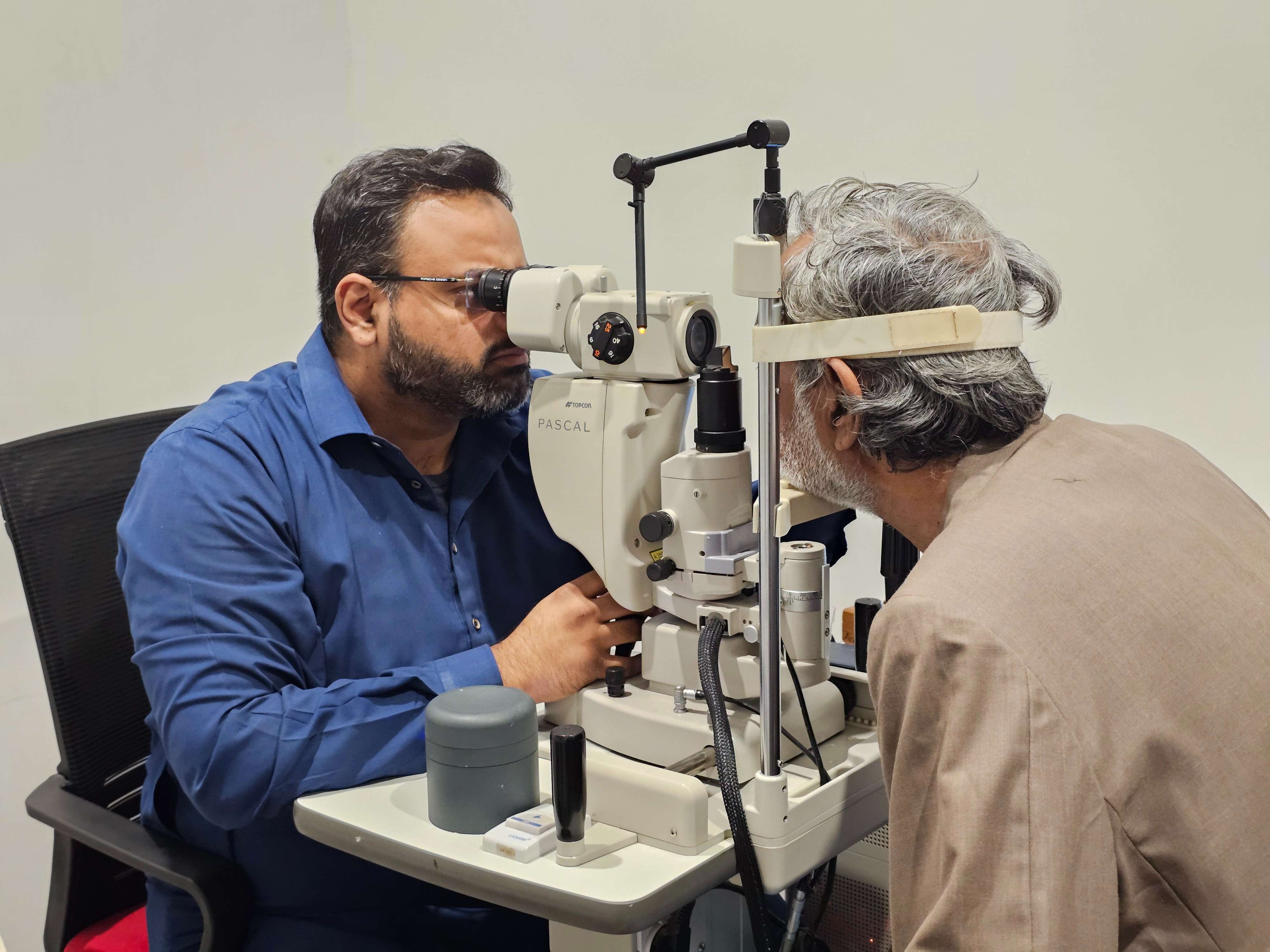
Nothing ruins your day like the sudden grit of dust in your eye. It stings, it waters, and the instinct to rub is almost impossible to resist. Do the wrong thing and you could end up with a corneal scratch or an infection that needs a doctor. Do the right thing and the irritation disappears in minutes with no lasting harm.
This guide gives clear, practical steps you can use right now, immediate do’s and don’ts, the best eye drops to reach for, how to clean your eye safely, when to see a specialist, and how to reduce the long term risk of repeated problems.
Karachi and other large Pakistani cities live with high dust and pollution levels. Pakistan’s average PM2.5 was measured at roughly 73.7 micrograms per cubic metre in 2023, far above WHO safe levels. That heavier airborne load makes eye irritation, dryness and small foreign body problems far more frequent than in cleaner air environments. If you live and work in dusty conditions, you will face this problem multiple times unless you protect your eyes.
Another local reality is that many eye clinic visits in Pakistan are for trauma and foreign bodies. Clinic series show that metallic and other small fragments account for a large share of ocular surface complaints, which helps explain why workplace safety and quick first aid matter.
Rubbing is the single biggest mistake. When you rub you can scratch the cornea, push a particle deeper, or contaminate the eye with whatever is on your fingers. That small immediate relief from rubbing is not worth a possible corneal abrasion or infection.
Do this instead right away:
Here is the step by step method for safe flushing of your eyes:
Pick preservative free lubricating eye drops for comfort and safety. These eye drops soothe the surface, wash away microscopic particles, and do not irritate the eye if used frequently. Single use ampoules are best if you need to dose many times a day.
Do not use topical anaesthetic drops at home. They mask pain and delay healing and are intended for short term professional use only. Do not start antibiotic eye drops at home unless a doctor prescribes them misuse can hide worsening infection and promote resistance. If a clinician finds a corneal scratch or contaminated particle, they will prescribe the correct antibiotic.
Go to an ophthalmology emergency or clinic right away if any of these apply:
Many serious ocular foreign bodies come from workplaces where grinding, cutting or hammering sends metal or wood fragments into the air. Preventive measures prevent most of these visits.
Simple employer enforcement of PPE and on the spot eye flushing reduces the number of serious cases seeking emergency surgical care. Regional data show metallic foreign bodies and work related incidents are a common reason for eye clinic attendance, which shows the importance of these steps.
This is the unique tip many blogs miss. Put together a small eye kit for home, car and workplace. Include:
This kit turns panic into practical action and usually prevents a minor dust incident from becoming an infection risk.
Most simple dust exposures that are flushed and uninjured settle in 24 to 48 hours. If a clinician removes a superficial foreign body you may be given antibiotic drops and asked to return in 24 to 72 hours to confirm the cornea is healing. If there was a corneal abrasion, you will generally feel better within a few days and fully healed within
one to two weeks. Any worsening of pain, vision, or new discharge requires an urgent recheck.
Not everyone can afford private eye care. For Karachi residents who need low cost screening, surgical referral or community camps, POB Trust Karachi runs free eye camps and outreach programs and helps connect patients to specialist care. If you are unsure where to go after a worrying eye incident, POB Trust Karachi is a practical local resource for screening and information on referral options. Visit POB Trust Karachi’s about page to learn more about their community work and upcoming camps.
Dust in the eye is common in Karachi, but the right choices stop most problems before they start. Don’t rub. Flush promptly with clean water or sterile saline. Use preservative free eye drops for comfort. Avoid amateur removal tricks and see a clinician for severe pain, blurred vision, chemical splash or embedded particles. If cost or access is a concern, remember that POB Trust Karachi provides community camps and referral help and is a useful place to check for screening and support. Taking a small step today, like making an eye first aid kit and using protective eyewear when you wor,k will prevent more painful and costly problems later.
Frequently asked questions
1. Will one wash always remove the particle?
Not always. Many small dust particles flush away with one thorough wash, but stubborn grit or sharp fragments may require clinic removal.
2. Can I use any eye drops after flushing?
Prefer preservative free lubricants. Avoid steroid drops unless prescribed by a doctor because steroids can worsen infections if used inappropriately.
3. Is it safe to wear contact lenses after an incident?
Do not wear contacts until the eye is fully comfortable and a clinician clears you.