If you live in Karachi or other big Pakistani cities, you already know dust is part of daily life. It gets into your clothes, your home, and yes, into your eyes. Repeated dust exposure is not just uncomfortable. Over months and years, it quietly raises the chance of dry eye, allergic irritation, recurring corneal scratches, and even accelerated surface disease that makes vision care more complicated.
Pakistan ranks among the countries with the worst particulate pollution in 2023, with national PM2.5 concentrations measured at roughly 73.7 micrograms per cubic metre, far above the World Health Organization guideline. That high airborne particle load helps explain why eye problems linked to dust are so common here. If you want practical protection steps, what to watch for, how to treat early symptoms, and where to get reliable help in Karachi, this guide was written for you.
Think of your ocular surface like a thin, delicate paint layer. One dusty day might only leave you gritty and watery for a few hours. Repeated dust exposure is like sandpapering that surface a little bit each time. Over months and years, the consequences include:
Increased dry eye symptoms. Dust and particulate pollution destabilise the tear film and make eyes feel dry, gritty and tired. Chronic tear film disruption can lead to persistent discomfort and reduced visual quality.
Higher rates of allergic conjunctivitis and persistent redness, especially in sensitive people. Recurrent allergic reactions inflame the ocular surface and make it more vulnerable to damage.
More frequent corneal abrasions and epithelial defects occur when a particle scratches the surface. Repeated microtrauma can scar or leave areas that are slower to heal.
Elevated risk of infection after an abrasion, particularly when the particle is organic or contaminated. Soil and plant material carry microbes that can invade damaged tissue.
Long term surface disease. Over years, repeated inflammation and irritation can change how the ocular surface functions and make you more likely to need ongoing medical treatment.
These are not hypothetical risks. Regional eye clinic series show ocular surface foreign bodies, corneal abrasions and trauma as common emergency presentations. One Pakistani series reported corneal foreign bodies in nearly 67 percent of their ocular surface foreign body cases, underlining how often dust and small fragments reach the cornea in real practice.
Repeated dust exposure contributes to eye problems in several linked ways:
Tear film breakdown leads to fluctuating vision and discomfort during reading or screen use.
Chronic inflammation from dust and pollutants causes redness and persistent soreness.
Microabrasions from grit encourage recurrent infections if not properly treated.
Longstanding surface irritation can accelerate conjunctival and corneal changes that make surgical or laser procedures riskier later on.
In short, ignoring repeated dust exposure is a slow path to more appointments, more medications, and in some cases, more invasive treatments down the line. The good news is that targeted prevention and simple routine steps reduce risk a lot.
Eye protection and small habit changes are the most effective first line defence against repeated dust exposure:
Wear protective eyewear outdoors on dusty days. Sunglasses with side coverage reduce the amount of dust reaching your eyes. For dusty chores and DIY work, use safety goggles.
Use preservative free lubricating eye drops daily when dust levels are high. These drops stabilize the tear film and wash away tiny particles. Single use saline or preservative free artificial tears are best for frequent use.
Keep windows and doors closed during dust storms and use air conditioning with clean filters when possible. Indoor air quality matters too.
Use a damp cloth rather than dry sweeping when cleaning indoors to stop stirring dust into the air.
Wash your hands frequently before touching your eyelids and avoid rubbing your eyes. Rubbing increases microtrauma and introduces contaminants.
If you wear contact lenses, take extra care. Consider switching to daily disposable lenses during dusty seasons or pausing lens wear until symptoms settle.
These measures reduce immediate irritation and prevent the cumulative microinjuries that cause long term problems.
The keyword here is lubrication and safety. For everyday relief and protection, choose:
Preservative free artificial tears for regular use. These soothe and help clear particulate matter without the toxicity some preservatives cause with frequent dosing.
Sterile saline ampoules for flushing when dust gets in the eye. Single use ampoules are cheap and do not risk contamination.
Avoid topical anaesthetic drops for home use. They mask pain and slow healing and should only be used in clinics.
If your symptoms worsen or you develop persistent redness, discharge, light sensitivity or vision changes, see an eye specialist rather than self treating with antibiotic drops. Inappropriate antibiotic use can cause resistance and mask problems that need targeted care.
A large share of serious eye injuries in Karachi are work related. Employers and site supervisors can make a huge difference by enforcing eye protection:
Require safety goggles or face shields for grinding, cutting, welding, sanding and masonry work. Ensure the goggles have side protection and are properly fitted.
Provide training on PPE usage and make replacement safety glasses available.
Designate clean zones and first aid stations with sterile saline ampoules to flush eyes immediately after exposure. Prompt flushing reduces infection risk.
Regular workplace safety audits and simple supervision dramatically reduce incidence of metallic and high speed fragment injuries that can lead to intraocular foreign bodies.
If you or an employee suffers a high speed impact or suspects a metallic fragment in the eye, do not delay. Seek emergency ophthalmic care. Quick professional management can preserve vision.
Most small dust exposures settle with flushing and lubricating drops, but red flags requiring urgent review include:
Severe pain that does not improve with flushing.
New blurred vision or loss of vision.
isible foreign objects embedded in the eye.
Chemical exposure or plant material contamination.
Persistent redness or discharge after 24 to 48 hours.
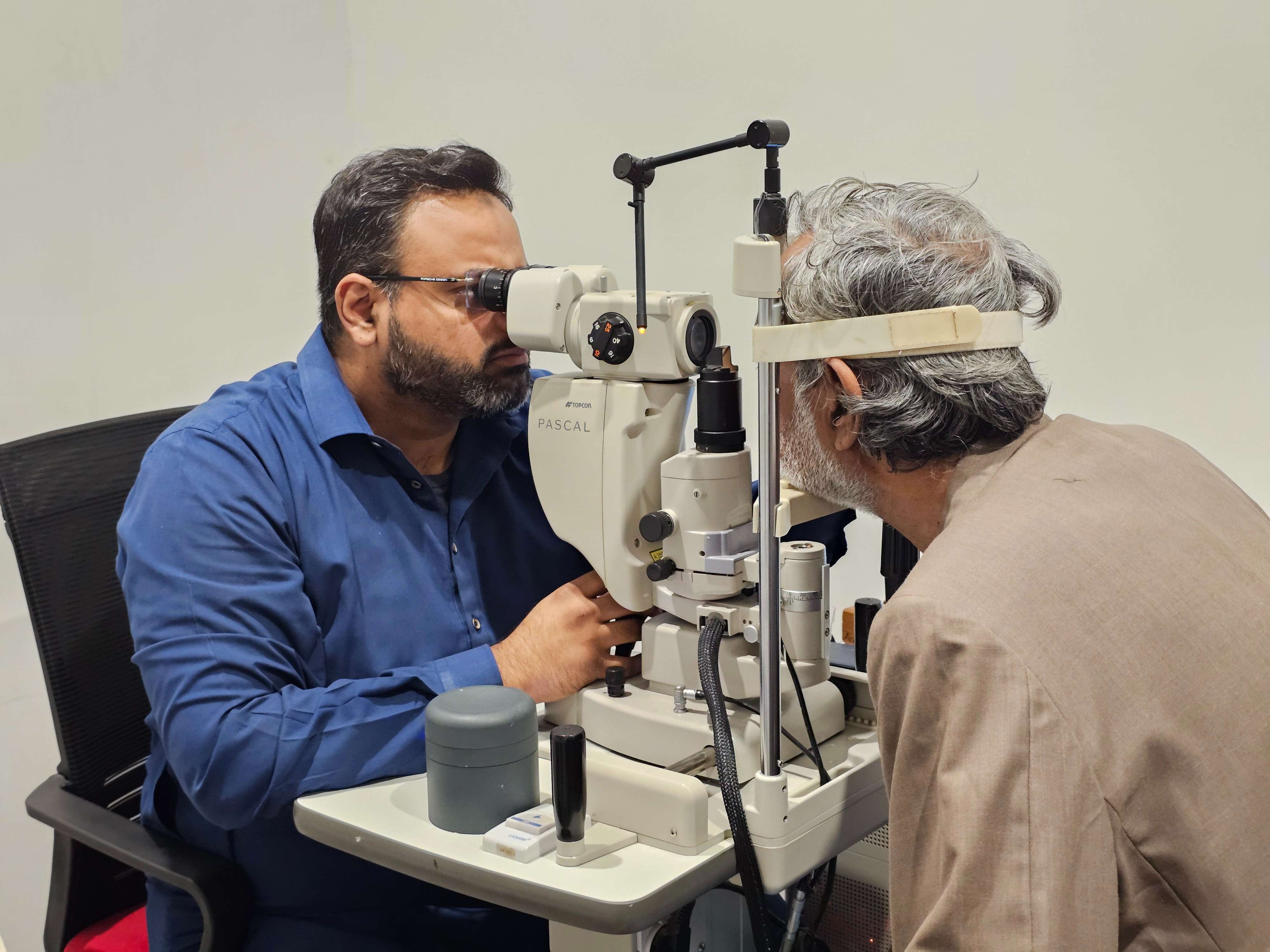
At the clinic the ophthalmologist will examine your eye under magnification, use topical anaesthetic, irrigate further, and remove any visible particles with sterile tools or microsuction. They may use fluorescein dye to detect corneal abrasions and will prescribe antibiotic drops if there is a scratch or contamination risk. In suspected deep metallic injuries imaging is ordered and surgical removal may be necessary. These steps minimise infection and scarring risk. Local tertiary centres document hundreds of trauma cases, so trained teams are experienced in managing these problems.
Not everyone can afford private care or an immediate specialist visit. POB Trust Karachi runs free eye camps, screening and referral services across Sindh and Karachi, and they help bridge the gap between community need and specialist care. If cost or access is a barrier, contact POB Trust Karachi for information on upcoming free clinics or referral assistance so you can get a timely assessment and treatment. Their outreach reduces delays that otherwise worsen outcomes.
If you are regularly exposed to dust at home or work, create a simple plan with these elements:
Daily protective routine. Sunglasses, safety goggles for tasks, and preservative free artificial tears twice daily during dusty seasons.
Quarterly or annual eye checks. A routine exam catches early signs of persistent surface disease and gives tailored advice.
Documented workplace safety plan. Ask your employer for on site eye protection kits and flushing supplies.
If you have chronic symptoms, ask the eye doctor about treatments for dry eye such as lid hygiene, in clinic therapies and prescription tear stabilisers. Treating dry eyes early prevents progression.
If you cannot pay for care, check POB Trust Karachi schedules. Their free camps and referral pathways help many patients access care early.
Myth: A little dust will not cause lasting problems. Fact: Repeated exposure increases chronic dry eye, raises infection risk after abrasions and over time can change the ocular surface.
Myth: Rubbing the eye helps dislodge grit. Fact: Rubbing increases abrasion risk and should be avoided. Use flushing instead.
Myth: Any eye drop will do. Fact: For repeated use, choose preservative free lubricants. Avoid topical anaesthetics at home.
Living with dust in Pakistan is not optional, but damage from repeated dust exposure is preventable. Use eye protection, stabilize your tear film with preservative free eye drops, avoid rubbing, flush promptly if dust gets in your eye, and seek professional help for severe symptoms. If cost or access is a concern, look into community services and free camps run by POB Trust Karachi. Their outreach and referral work help many Karachi residents get timely assessment and treatment when they need it most. Your vision is worth a small daily effort that prevents big problems later.