Nothing is more jolting than that sudden scratchy feeling when dust gets in your eye. One moment you are fine, the next your eye waters, blink nonstop and everything looks blurry. If you live in Karachi, you already know dust and pollution are part of daily life, so sooner or later you or someone at home will face a gritty red eye. This guide gives clear, practical first aid steps you can use right away, safe home remedies that actually help, when to stop and see a doctor, and how to avoid infection after a dust incident.
Dust in the eye triggers a powerful reflex. Tears flood the eye to wash the particle away, you instinctively rub, and that rub can turn a minor irritation into a corneal scratch. Karachi’s high levels of airborne particles make these episodes more frequent.
Pakistan’s national average PM2.5 was reported at about 73.7 micrograms per cubic metre in recent air quality reports, many times higher than World Health Organization guideline levels. That heavy particulate load is a big reason red eye and eye irritation are everyday problems for city residents.
These are the safe, evidence based steps recommended by major health sources and ophthalmology guides. If you act calmly and correctly in the first minutes, you cut the risk of a scratch, infection, and prolonged discomfort.
How to flush the eye properly
Many people try a quick rinse and give up. For dust in the eye, you want a thorough, steady flush:
After you flush and the gritty feeling fades, soothing drops help comfort the eye and stabilise the tear film. Use preservative free lubricating eye drops, also called artificial tears. These keep the surface moist and help wash away microscopic particles. Single use ampoules are best for repeated use during the first 24 to 48 hours.
Avoid using topical anaesthetic eye drops at home. They mask pain and interfere with the eye’s healing process. These drops should only be used by professionals in a clinic. Do not start antibiotic eye drops on your own. Only a doctor should prescribe antibiotics after an assessment, because unnecessary antibiotic use can cause problems and mask serious infection.
Simple home remedies that actually help red eyes
You will read many internet ideas. These are the safe ones supported by practice and clinics:
If you have these signs, go to an emergency eye clinic or call ahead so they can prepare. For Karachi residents who cannot afford private care, POB Trust Karachi organises free eye camps and provides referral pathways to specialist clinics, which many people use for urgent assessment and follow up.
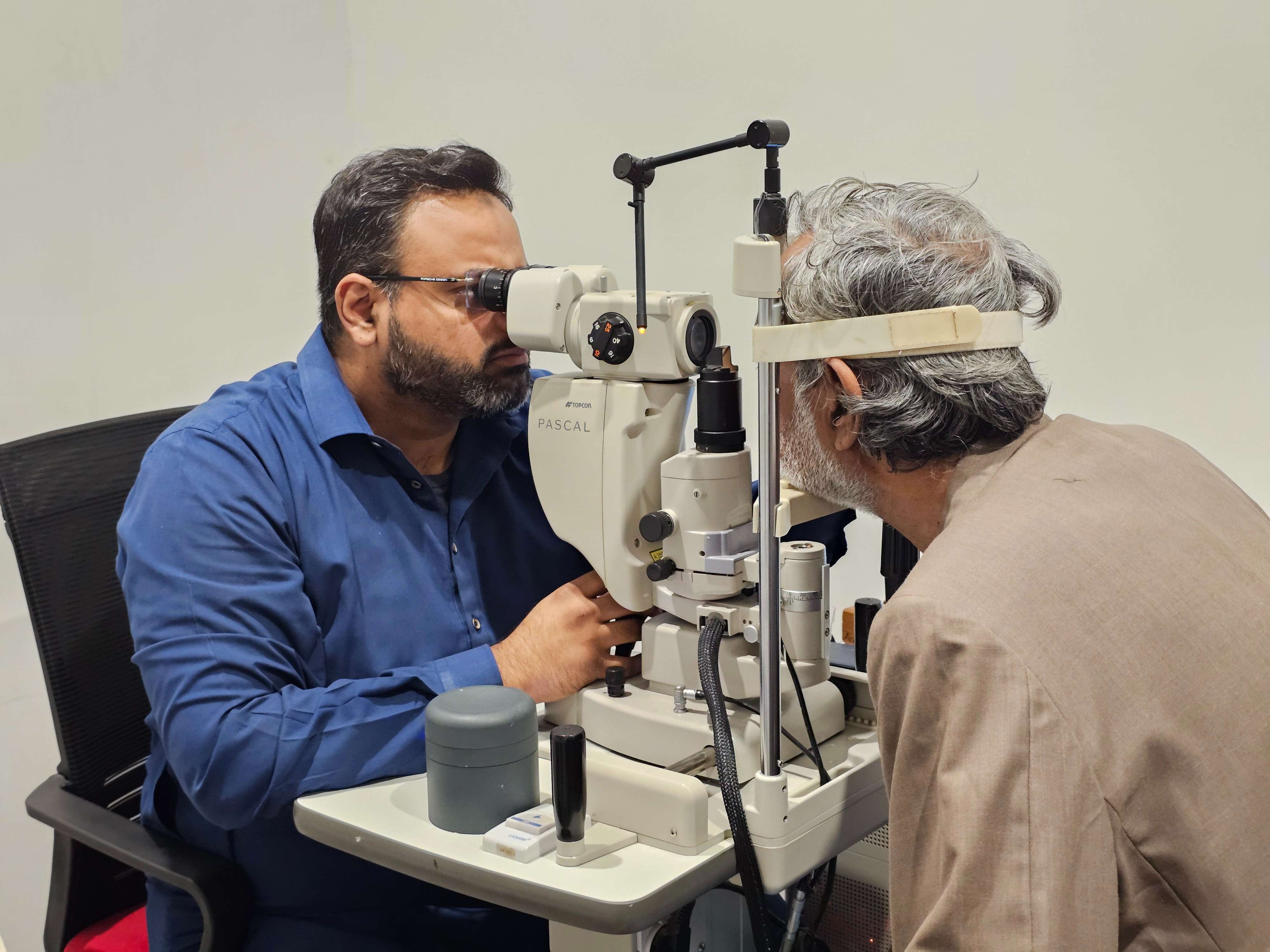
At the eye clinic, a doctor will examine the eye under a slit lamp microscope for detailed magnified inspection. The usual steps are:
• Wash your hands before touching your eye.
• Flush thoroughly for at least 10 minutes.
• Use preservative free eye drops for comfort.
• Remove contact lenses and avoid wearing them until cleared.
• See a doctor for severe pain, visual change, or if a particle remains.
• Do not rub the eye.
• Do not try to dig out a particle with cotton buds or tweezers.
• Do not use topical anaesthetic drops at home.
• Do not use makeup or creams near the eye during healing.
Small changes at home and at work prevent most episodes of dust in the eye:
Not everyone can access private clinics quickly. POB Trust Karachi runs free eye camps, surgical outreach and screening programmes across Sindh and Karachi. If cost or access is a concern, check POB Trust Karachi schedules or call them for referral advice. Their outreach often connects patients to timely care and reduces delays that can worsen infections after eye injuries.
If the eye is flushed and no abrasion occurs, symptoms usually settle in 24 to 48 hours. If a clinic removes a superficial foreign body, you may get antibiotic drops and a review appointment in 24 to 72 hours. Corneal abrasions typically improve in several days and heal within one to two weeks. Return to the doctor immediately if pain worsens, vision blurs, or discharge appears.
Bring a list of symptoms and when they started:
If cost is an issue, ask about charitable clinics and free camps such as those arranged by POB Trust Karachi.
Dust in the eye is common in Karachi and it is uncomfortable, but most cases are safely handled at home if you follow the right steps. Wash your hands, do not rub, flush thoroughly for 10 to 15 minutes, use preservative free eye drops for comfort, and see a doctor right away if pain, vision changes or a stuck particle remains.
Keep a pocket eye kit and use protective eyewear for dusty tasks. If you need affordable screening or referral help, POB Trust Karachi regularly runs free eye camps and outreach programmes that help people get timely care. With the right first aid and quick action, you can avoid infection and protect your vision.